Build Volume
Stated Top Speed
Dual Extruders (IDEX)
Heated Chamber
Stated Accuracy
Acceleration
Hotend Flow Rate
Eddy Current Leveling
Creatlabs Ultra Series · High-end industrial
Official Distributor
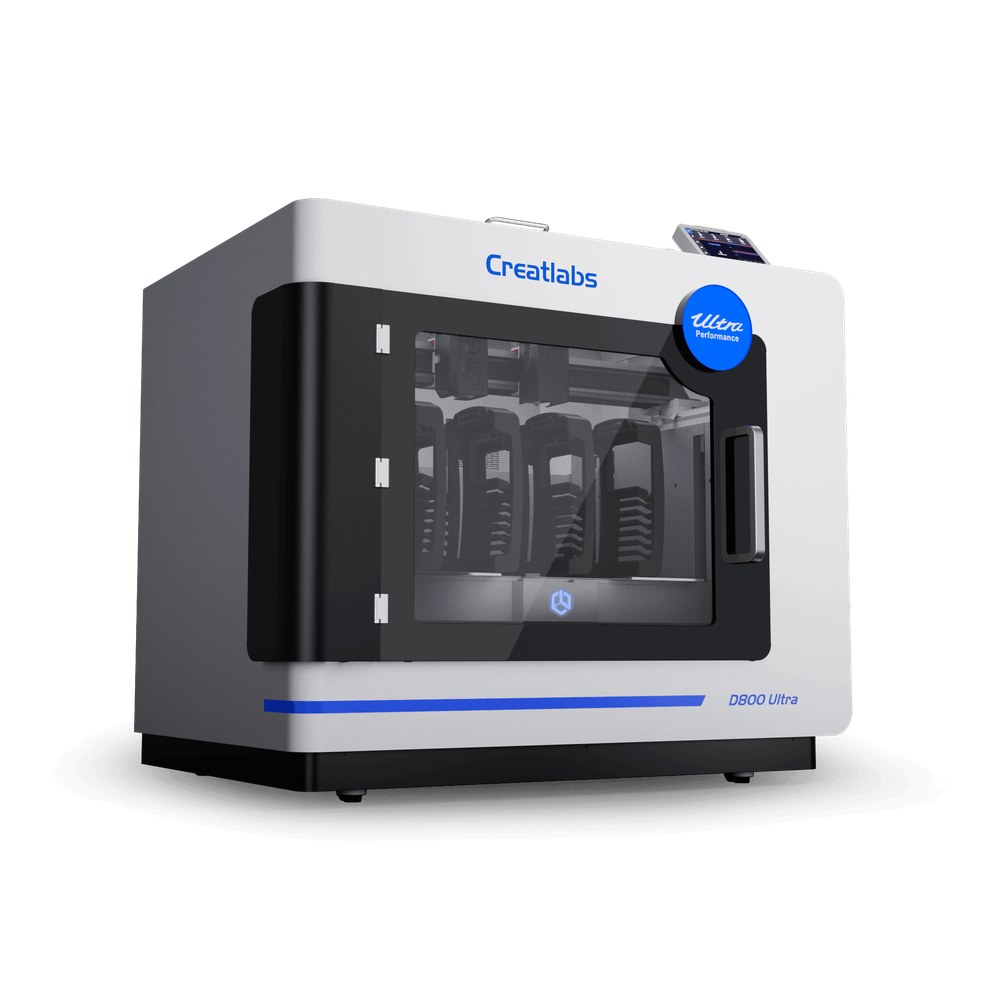
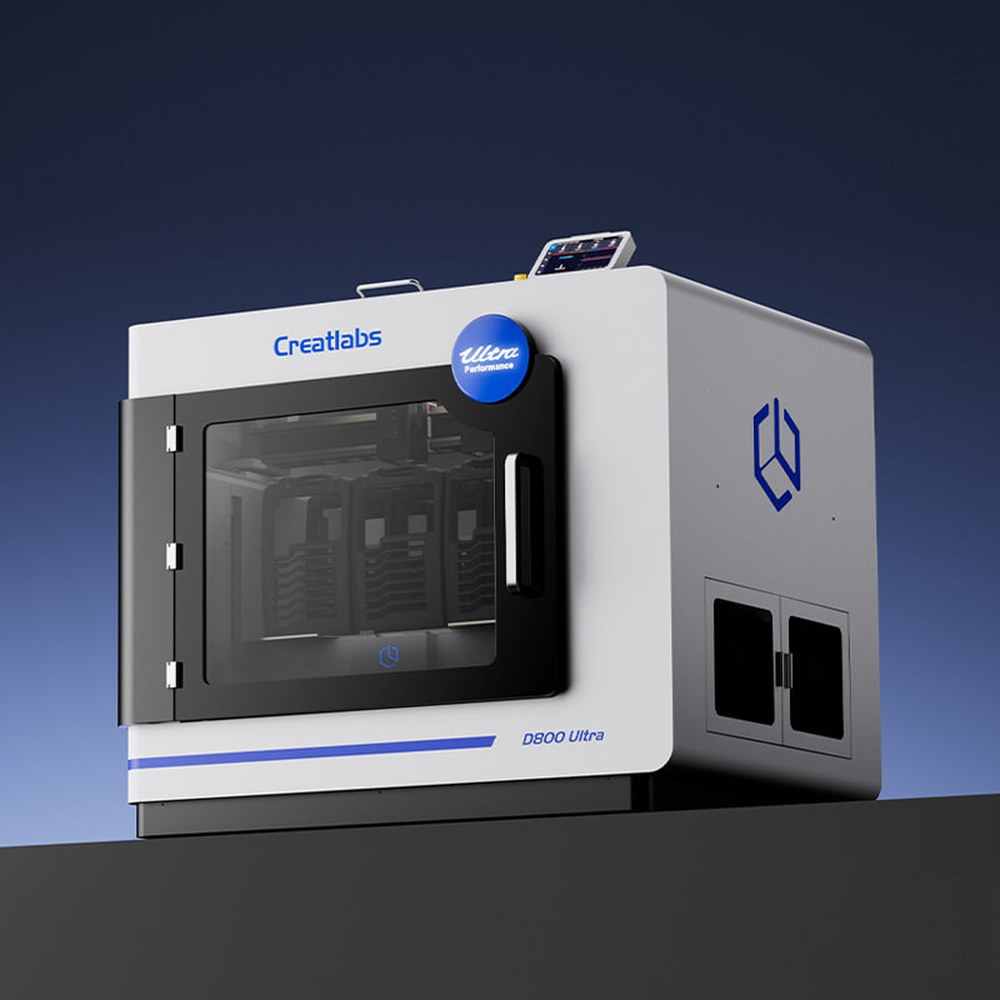
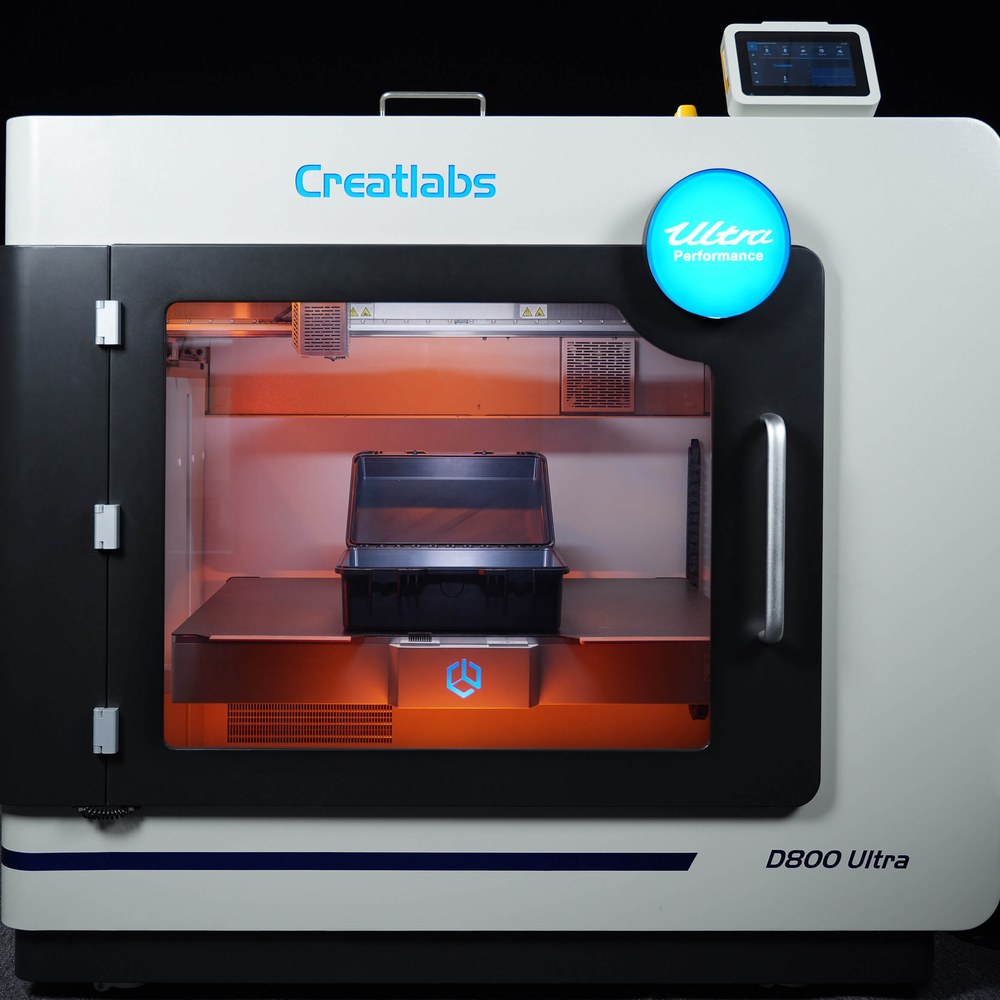
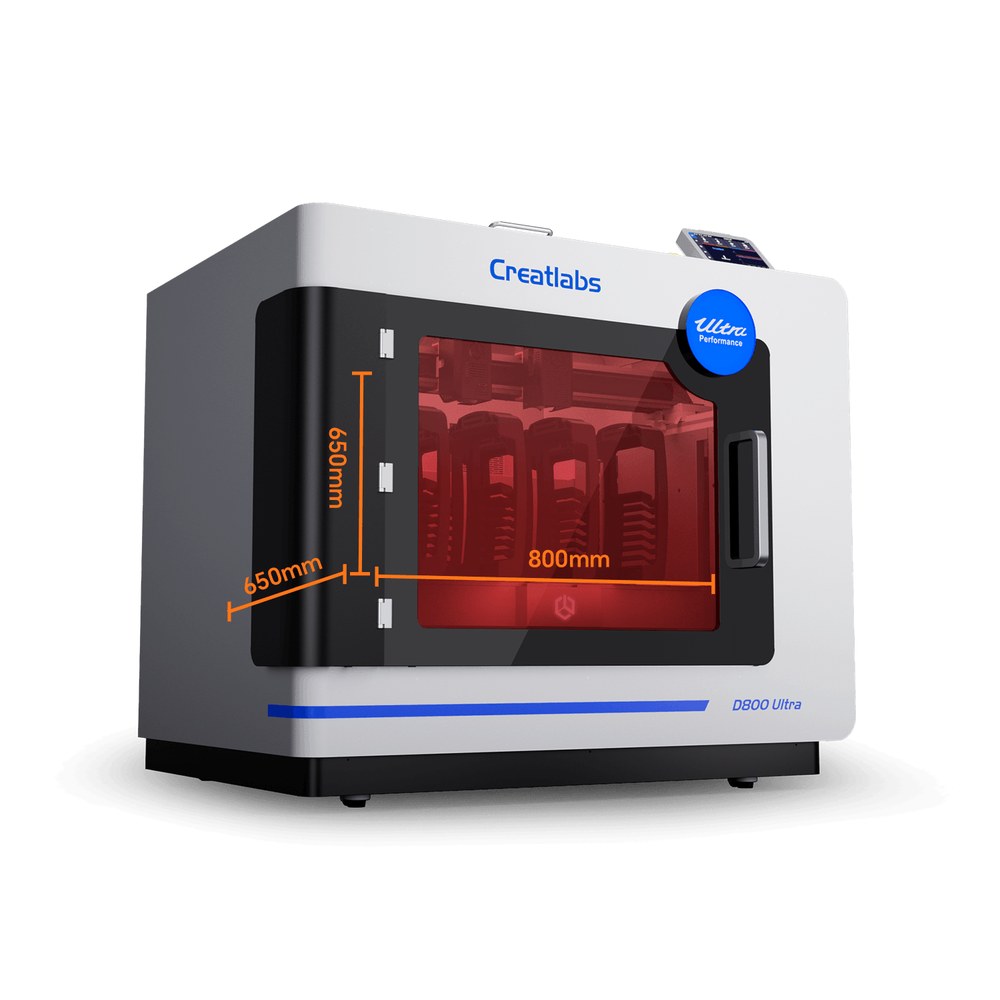
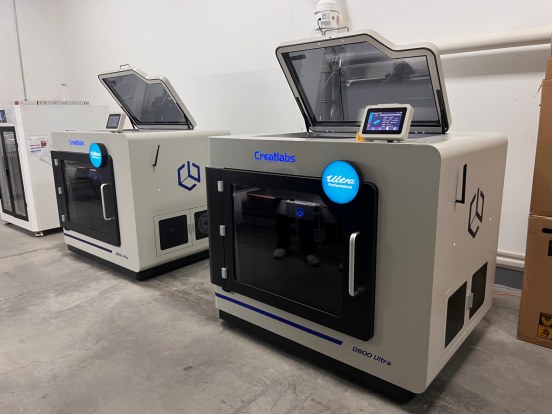
The CreatBot D800 Ultra is a large format industrial 3D printer (FDM) from CreatBot’s Creatlabs Ultra series. It offers an 800 x 650 x 650 mm build volume, independent dual extruders (IDEX) that run at up to 420°C, and an 80°C actively heated chamber for engineering materials such as ASA, PC, nylon and carbon-fibre filled filaments. A Mag-Lev linear motor platform and Klipper firmware give a stated top speed of 1100 mm/s, with positioning accuracy of ±0.05 mm per 100 mm.
It suits manufacturers who need large functional parts, jigs and fixtures, and repeatable batches. MAKE3D is the official distributor in Singapore.
Creatlabs is the high-end industrial additive manufacturing brand of CreatBot, dedicated to large format, high-performance, production-grade FFF systems powered by linear motor motion, intelligent features and industrial-grade reliability. CreatBot says its aim is to move 3D printing from a prototyping tool to a scalable production platform.
The Ultra series is based on the Creatlabs FFF 2.0 system. CreatBot states that it delivers higher print speeds, assembly-ready precision and production-grade batch consistency for low-volume and scalable manufacturing, and describes its results as CNC-grade precision and near-injection-molding part quality.
Creatlabs FFF 2.0 versus CreatBot FFF 1.0. CreatBot compares models printed on the Creatlabs FFF 2.0 platform, which uses a linear motor structure, with models printed on its CreatBot FFF 1.0 platform, which uses belt-driven modules. For the D800 Ultra it pairs the machine with the D600 Pro3 HS.
| Creatlabs FFF 2.0 (Ultra series) | Linear motor structure: D800 Ultra and its sister model in the Ultra series |
| CreatBot FFF 1.0 | Belt-driven module structure: CreatBot cites the D600 Pro3 HS as the comparison model for the D800 Ultra |
| What CreatBot compares | Surface quality, detail fidelity, precision control, print speed and batch consistency |
MAKE3D is the official distributor in Singapore.
| Series | Creatlabs Ultra (Creatlabs FFF 2.0 system) |
| Technology | FDM / FFF |
| Build volume | 800 x 650 x 650 mm single nozzle; 740 x 650 x 650 mm dual-nozzle support; 400 x 650 x 650 mm mirror duplication |
| Extruders | Independent dual extruder (IDEX) |
| Nozzle diameter | 0.4 mm standard; 0.3 / 0.5 / 0.6 / 0.8 / 1.0 mm optional |
| Max nozzle / bed / chamber temp | 420°C / 120°C / 80°C; filament drying chamber 70°C |
| Max printing speed | 1100 mm/s (stated); acceleration 10,000 mm/s²; hotend flow 90 mm³/s |
| Printing accuracy | ±0.05 mm per 100 mm; XY positioning 0.001 mm; Z positioning 0.00052 mm |
| Filament | 1.75 mm; PLA, ABS, ASA, PP, PETG, PC, Nylon, TPU and CF/GF grades |
| Firmware / slicers | Klipper; CreatWare, Orca Slicer, Cura, Simplify3D, Prusa |
| File types / OS | G-code, STL, 3MF, OBJ, AMF, STP, STEP; Windows, macOS |
| Connectivity / display | USB, U disk, Wi-Fi, LAN; 10-inch colour touchscreen |
| Power | 220–240 V, 50–60 Hz; rated 7000 W |
| Machine size / weight | 1480 x 1080 x 1280 mm; 370 kg (package 1550 x 1170 x 1510 mm, 480 kg) |
| Air filtration | Built-in HEPA + activated carbon |
| Daily output (estimated) | 1-2 kg with 0.4 mm nozzle; 2-5 kg with 0.8 mm nozzle (24 h continuous printing; depends on model and infill) |
| Bed leveling | Eddy current, 0.001 mm probing accuracy, about 60 s |
| XY nozzle offset | HD camera AI alignment, 0.02 mm |
| Print platform | Aviation aluminium plate + magnetic platform |
| Z axis | Independent Z axis |
| Chamber insulation | Three-layer insulation; external air cooling |
| Safety | Schneider electrical protection, safety door lock, emergency stop, thermal protection, motion safety, physical Wi-Fi switch |
| Production features | Filament run-out / clog detection, dual-nozzle auto-resume, auto material feeding, remote camera |
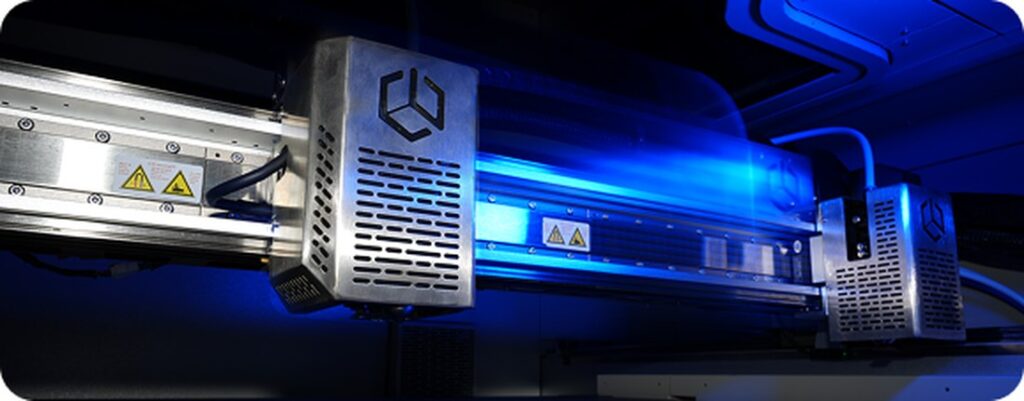
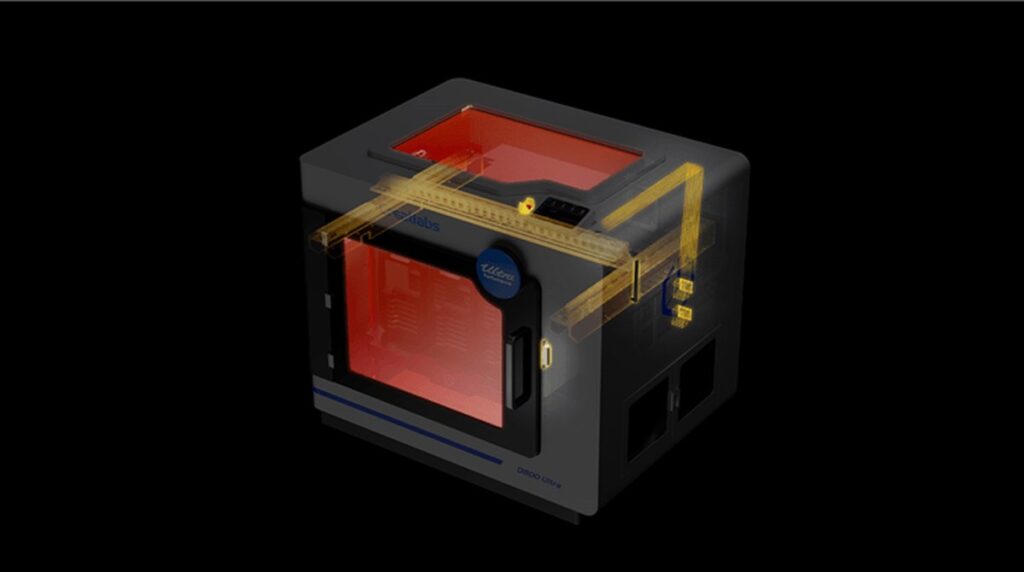
The XY axes use a Mag-Lev direct-drive linear motor system instead of belt or screw drive. CreatBot explains that the linear motor removes mechanical transmission friction, which allows higher speeds and more precise motion control, and states that the result is more consistent dimensional accuracy, better surface quality and higher production efficiency.
CreatBot’s figures for the D800 Ultra: a stated top speed of 1100 mm/s at 10,000 mm/s² acceleration under Klipper high-speed firmware, XY positioning accuracy of 0.001 mm and Z positioning accuracy of 0.00052 mm, with an independent Z axis. CreatBot says the Ultra series is meant to end the usual compromise between size, speed and precision on large format printers.
CreatBot states a printing accuracy of ±0.05 mm per 100 mm and says the Ultra is designed to keep it over years of industrial production, combining automatic calibration with real-time compensation. Because the linear guides move without physical contact, CreatBot says there is no lead-screw wear to degrade accuracy.
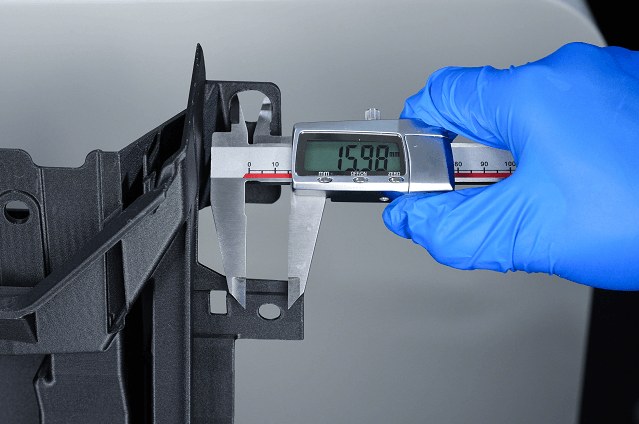
CreatBot also lists repeat positioning accuracy of ±0.01 mm for the D800 Ultra, backed by a closed-loop auto-calibration system, and states that surface quality and dimensional consistency suit direct assembly without extensive post-processing.
CreatBot says the 90 mm³/s flow rate is designed to melt filament fully at high speed and so increase interlayer bonding, and that the high-flow extrusion keeps abrasive carbon-fibre filament feeding consistently.
Nozzle temperature reaches 420°C. 0.4 mm nozzles are standard, with 0.3, 0.5, 0.6, 0.8 and 1.0 mm optional. Filament run-out and clog detection and auto material feeding are listed.
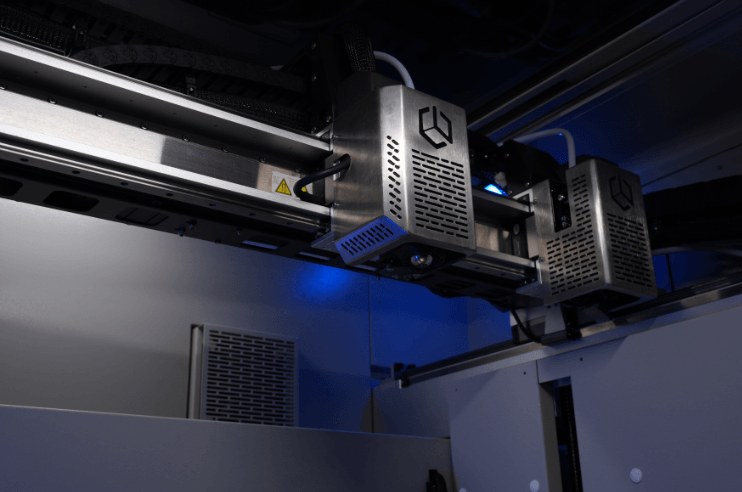
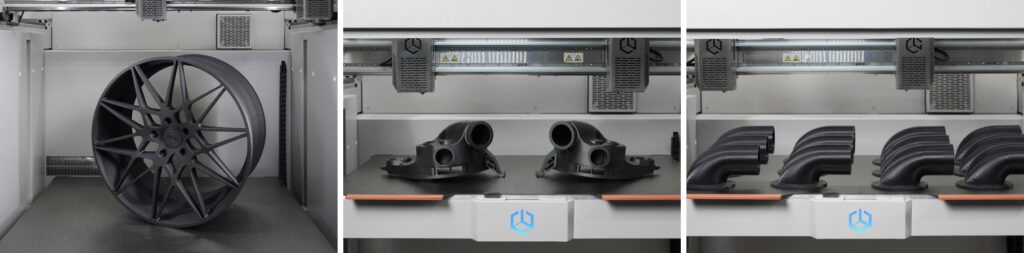
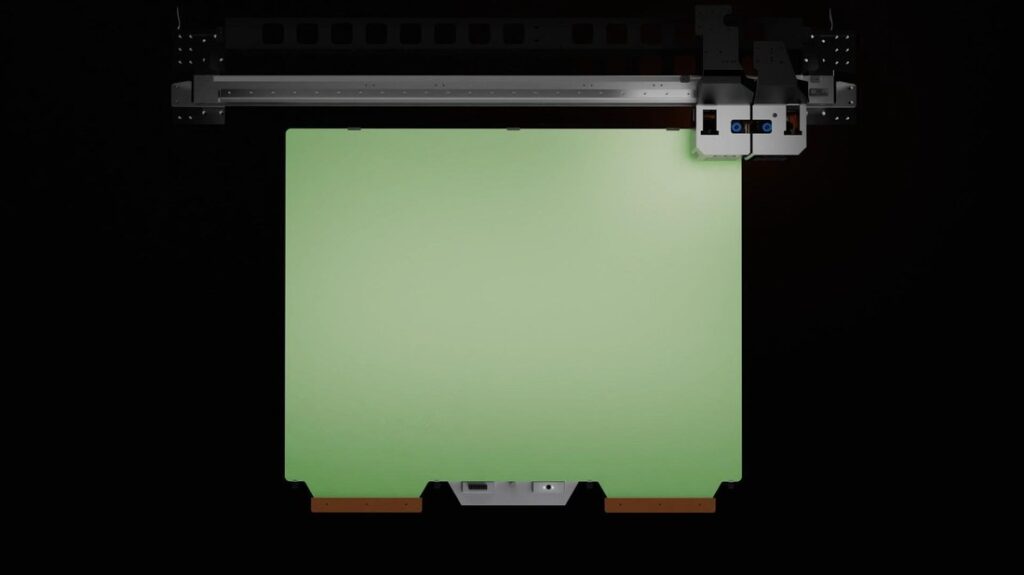
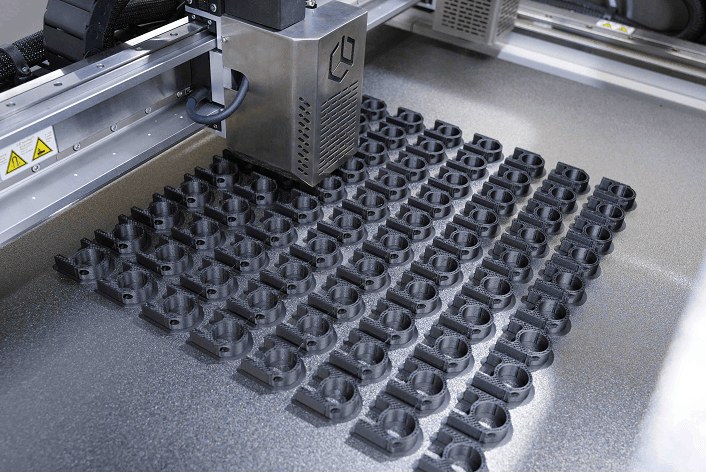
The independent dual extruder (IDEX) system is one of the D800 Ultra’s key strengths. Single-nozzle mode uses the full 800 x 650 x 650 mm build volume for large one-piece parts. Dual-nozzle support mode (740 x 650 x 650 mm) prints support material such as PVA separately from the main material. Mirror duplication mode (400 x 650 x 650 mm) has both extruders print symmetric parts at the same time, which CreatBot says doubles productivity.
Several small parts can also be nested and printed in one batch. CreatBot adds that soluble or breakaway supports (PVA, S-270) help with cavities, overhangs and internal channels, and that fully automatic dual-nozzle XYZ offset calibration with real-time compensation avoids misalignment when switching between nozzles.
An active 80°C heated chamber maintains a stable thermal environment, which CreatBot says optimises printing of engineering plastics such as ASA and ABS. Three-layer chamber insulation and external air cooling are listed, the heated bed reaches 120°C, and a filament drying chamber reaches 70°C. The print platform is an aviation aluminium plate with a magnetic surface.
CreatBot explains that ABS, ASA, PC and PA-CF are sensitive to temperature, and that keeping parts at a uniform temperature and cooling them slowly minimises internal stress, so that large parts come out in one piece with flat edges.
Full-auto dual-nozzle XYZ offset calibration. For XY, an HD macro camera with fully automatic AI visual recognition aligns the two nozzles to 0.02 mm accuracy. For Z, CreatBot lists full-auto multiple positioning to 0.005 mm accuracy.
Eddy current bed leveling. High-frequency electromagnetic sensing with a non-contact, zero-wear sensor probes the large platform to 0.001 mm accuracy and completes calibration in about 60 seconds. CreatBot states this improves precision by 99% compared with traditional methods and reduces leveling time by 80%.
The D800 Ultra prints 1.75 mm filament. CreatBot highlights eight materials that run reliably on the series, PLA-CF, ABS, PETG, ASA, PC, PET-CF, PA-CF (UltraPA-CF) and PPS-CF, and states that compatibility goes well beyond them. Its filament compatibility list names PLA, ABS, ASA, PP, PETG, PC, nylon, TPU, ABS-CF, PC-CF, PET-CF, PET-GF, UltraPA-CF, PPS-CF, PA-GF, PA-CF, PA-ABS, PC-ABS, PP-GF and PP-CF.
For support, CreatBot lists PVA, S-270 and S-350. The machine pairs a 420°C nozzle, a 120°C bed and an 80°C chamber. Supported slicers are CreatWare, Orca Slicer, Cura, Simplify3D and Prusa, on Klipper firmware.
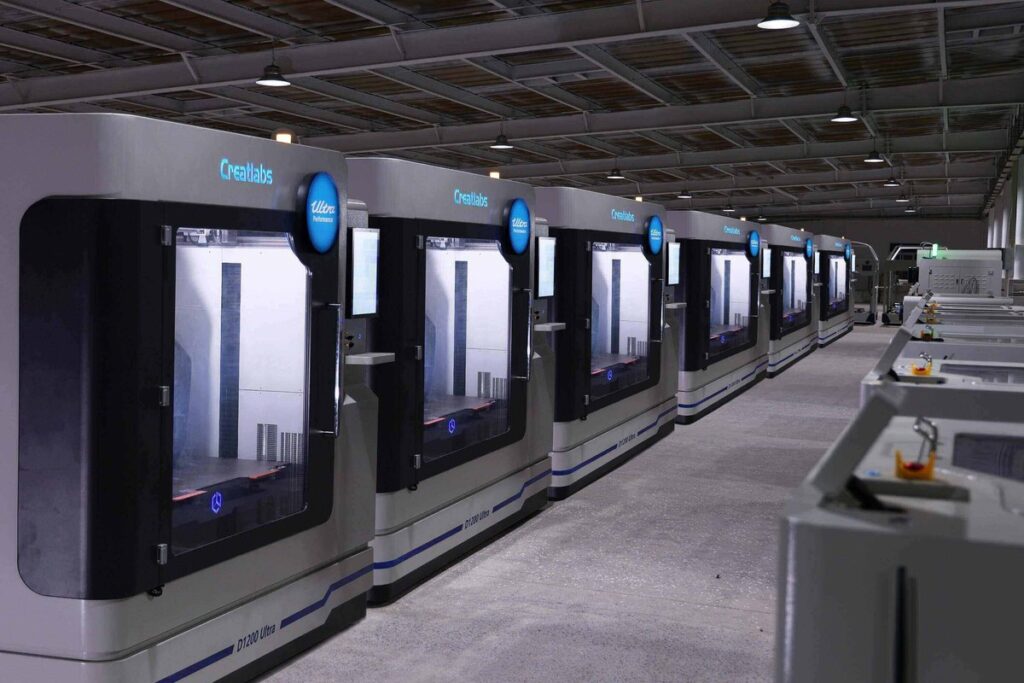
CreatBot designs the D800 Ultra for reliable 24/7 operation and states an extremely low failure rate, industrial-grade reliability and higher equipment utilisation. Listed features are filament run-out and clog detection, dual-nozzle auto-resume printing (power-failure recovery), auto material feeding, three-layer chamber insulation, remote camera monitoring and eddy current auto leveling. CreatBot also cites an all-steel frame, says the contact-free structure keeps precision from drifting during long high-speed runs, and describes the series as suited to unattended overnight printing.
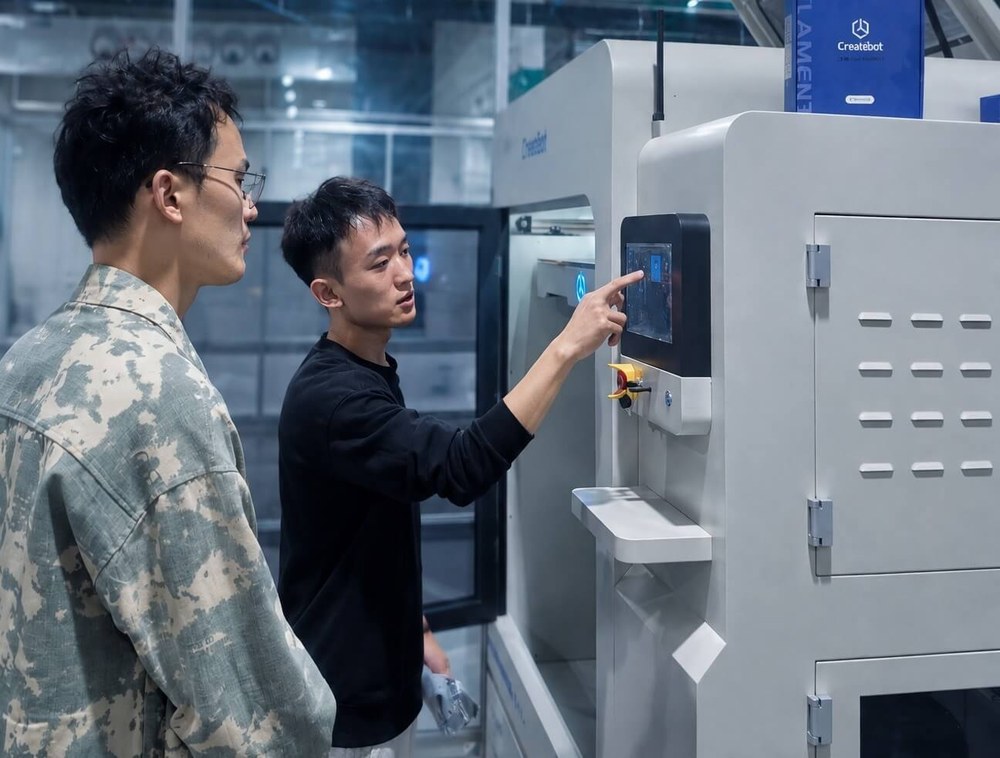
CreatBot says operation is kept simple, with one-touch auto leveling, automatic matching of material and process parameters and a 10-inch full-colour multi-language touchscreen. Built-in compact HEPA and activated carbon filtration is standard.
CreatBot lists Schneider electrical protection, a safety door interlock with door-opening detection, an emergency stop, thermal protection, motion safety and a physical Wi-Fi switch, protecting both the equipment and the operator.
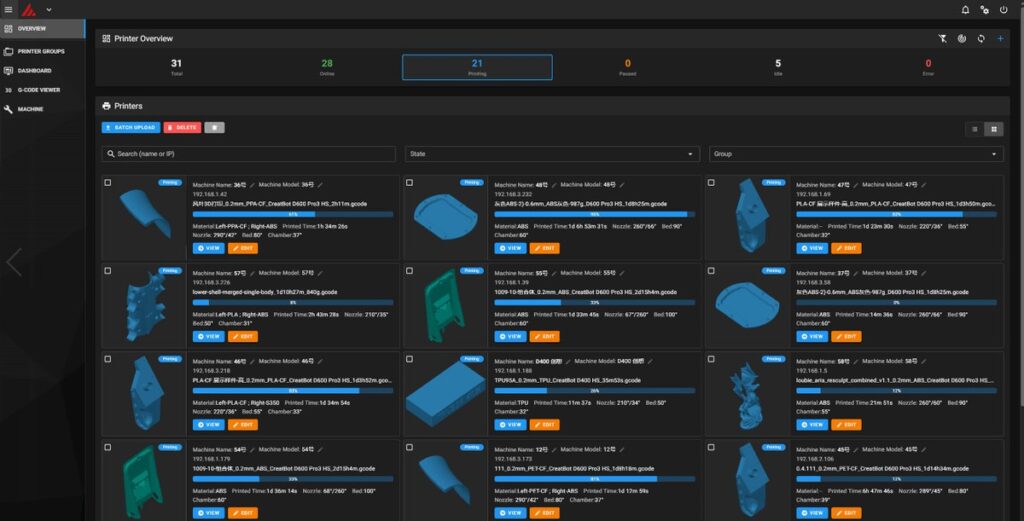
CreatBot’s printer cluster management system shows the online, printing, idle, paused and error status of all printers in one place, with device IP search and group management. Listed functions are device overview, batch job management, monitoring and debugging with remote camera, data traceability (print history and filament consumption are logged automatically), and remote operation and maintenance with real-time alerts. Nozzle, bed and chamber temperatures and print parameters are collected in real time.
Ask us what is included with the machine in Singapore.
CreatBot’s estimated daily output for the D800 Ultra, over 24 hours of continuous printing, is about 1-2 kg with a 0.4 mm nozzle and up to 2-5 kg with a 0.8 mm nozzle; CreatBot notes that actual results depend on model structure and infill. It states that the Ultra series delivers 2-3 times the production efficiency of conventional industrial-grade FFF printers.
For batch consistency, CreatBot describes several printers building different parts of an assembly kit, or identical parts across machines, with stable precision control so the components fit together. CreatBot states 99% batch conformity for the Ultra series.
CreatBot names two groups. End-product manufacturers use it for product prototyping, functional validation, assembly testing, customised parts, low-volume production, and tooling and fixtures, across automotive, robotics, home appliances, medical devices, aerospace, high-end equipment, electronics and new energy. Low-volume manufacturing service providers offer rapid prototyping, CNC machining, injection molding, 3D printing and on-demand production services.
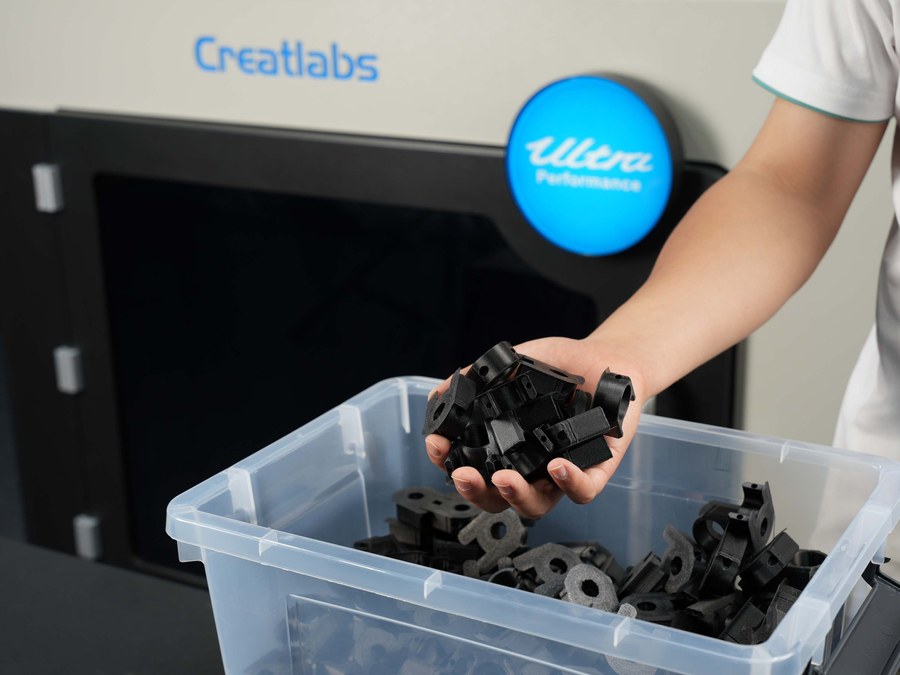
CreatBot adds that the D800 Ultra can print large parts in one piece, such as mechanical housings, jigs and fixtures and large-scale models, and names automotive, home appliance, aerospace and mold-making customers for the series.
CreatBot reports that after more than a year of evaluation, Haier Group’s Washing Machine Division bought two D800 Ultra printers for internal R&D validation, process optimisation and rapid manufacturing. Haier tested several platforms on criteria including printing precision, long-term stability, material compatibility and automation (CreatBot case study, 6 October 2026).
Results as reported by CreatBot: full-size front panel lead time down from 14-21 days to 1.5 days (a reduction of over 90%); design change and re-iteration cycle down from 7-14 days to within hours; first-pass assembly success of 98.5%+ against about 65% for outsourced parts. The case quotes peak speeds of 600-800 mm/s in this application (the stated top speed is 1100 mm/s). Parts include balance rings, drain valves and control panel housings for functional testing, personalised panels, and tooling and fixtures for the assembly workshop, in as fast as 24 hours from design to launch.
CreatBot states a global industrial service system covering remote diagnosis, local shipping, on-site service, installation and training, on-site maintenance and spare parts. For Singapore, MAKE3D is the official distributor: message us on WhatsApp for availability and a quotation.
The CreatBot D800 Ultra is a large format industrial 3D printer with an 800 x 650 x 650 mm build volume, independent dual extruders and an 80°C heated chamber. It uses a Mag-Lev linear motor platform and Klipper firmware, and CreatBot states a top speed of 1100 mm/s.
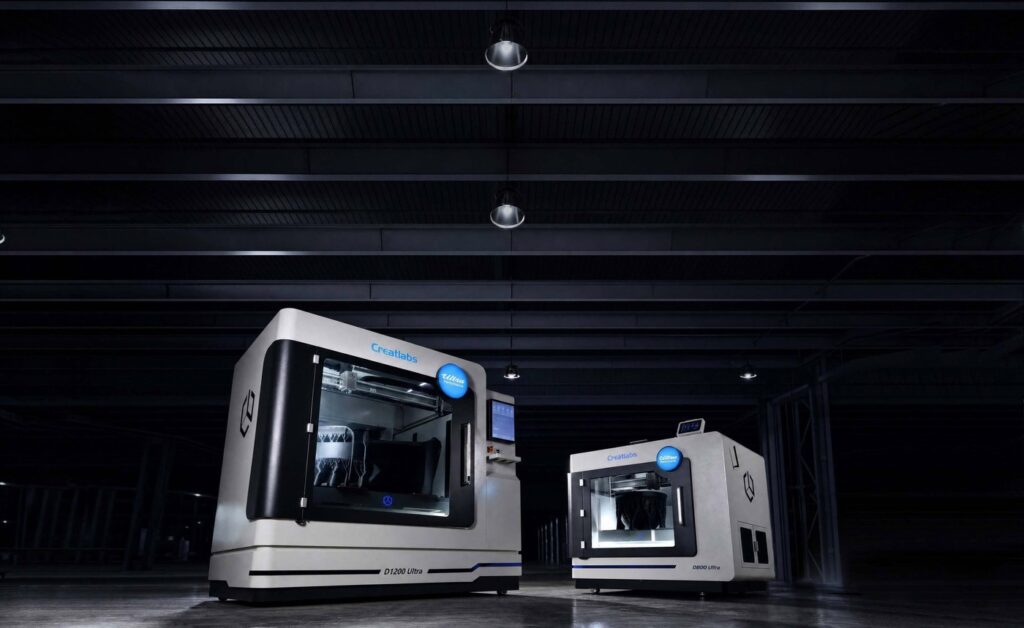
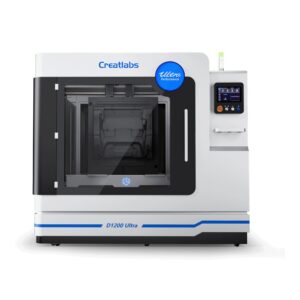
Creatlabs is the high-end industrial additive manufacturing brand of CreatBot. The Ultra series, the D800 Ultra and D1200 Ultra, is based on the Creatlabs FFF 2.0 system, which uses a linear motor structure and is aimed at functional prototyping, small-batch production, and jigs and fixtures.
CreatBot describes FFF 2.0 (the Ultra series) as using a linear motor structure, and FFF 1.0 as the traditional belt-driven module platform. It compares the two on surface quality, detail fidelity, precision control, print speed and batch consistency, pairing the D800 Ultra with the D600 Pro3 HS.
Its two independent extruders (IDEX) support single-nozzle mode at 800 x 650 x 650 mm, dual-nozzle support mode at 740 x 650 x 650 mm, and mirror duplication mode at 400 x 650 x 650 mm for printing two identical parts at once. Several small parts can also be nested in one batch. Nozzles reach 420°C.
The Mag-Lev linear motor platform and Klipper firmware give a stated top speed of 1100 mm/s and 10,000 mm/s² acceleration. CreatBot estimates daily output at about 1-2 kg with a 0.4 mm nozzle and up to 2-5 kg with a 0.8 mm nozzle over 24 hours; actual results depend on model structure and infill.
CreatBot states printing accuracy of ±0.05 mm per 100 mm, XY positioning accuracy of 0.001 mm and repeat positioning accuracy of ±0.01 mm. It says the linear motors give surface quality and dimensional consistency that suit direct assembly without extensive post-processing.
CreatBot says the linear guides move without physical contact, so there is no lead-screw wear to degrade accuracy, and that automatic calibration with real-time compensation keeps accuracy consistent over years of operation.
Yes. CreatBot highlights PLA-CF, ABS, PETG, ASA, PC, PET-CF, PA-CF (UltraPA-CF) and PPS-CF, and lists wider compatibility including PLA, PP, nylon, TPU and carbon-fibre and glass-fibre filled grades. Nozzle diameters of 0.3 to 1.0 mm are optional, and PVA, S-270 and S-350 are listed as support materials.
CreatBot designs it for 24/7 operation. Filament run-out and clog detection, dual-nozzle auto-resume printing, three-layer chamber insulation and eddy current auto leveling support long runs, and Schneider electrical protection, a safety door lock and an emergency stop protect the machine and operators.
CreatBot’s cluster management system shows the status of all printers in one place, collects temperatures and print parameters in real time, offers remote camera monitoring, logs print history and filament consumption for traceability, and sends real-time alerts with remote maintenance.
CreatBot names end manufacturers in automotive, robotics, home appliances, medical devices, aerospace, high-end equipment, electronics and new energy, and service providers offering rapid prototyping and low-volume production. A published case describes Haier’s Washing Machine Division buying two D800 Ultra printers.
MAKE3D is the official distributor of CreatBot in Singapore. Message us on WhatsApp for availability and a quotation.