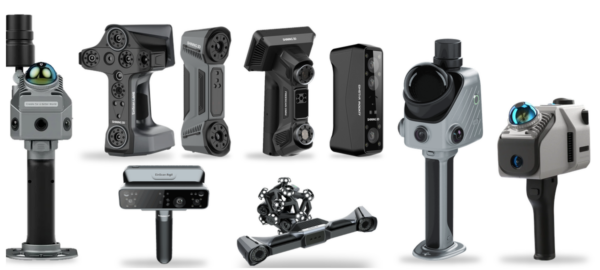
Marine, offshore and process plants run on equipment that is old, heavy and often undocumented. 3D scanning solves two problems there: recreating or checking a worn part such as a pump impeller, valve body or flange, and capturing a plant room, pipe rack or engine room as it is built today. MAKE3D is the Official Distributor of Shining 3D and FJD Trion in Singapore. Shining 3D handheld scanners cover the parts; FJD Trion LiDAR scanners cover the spaces. You can buy the equipment, or have us scan and model for you. Tell us the part or the space on WhatsApp and we will suggest the right approach.

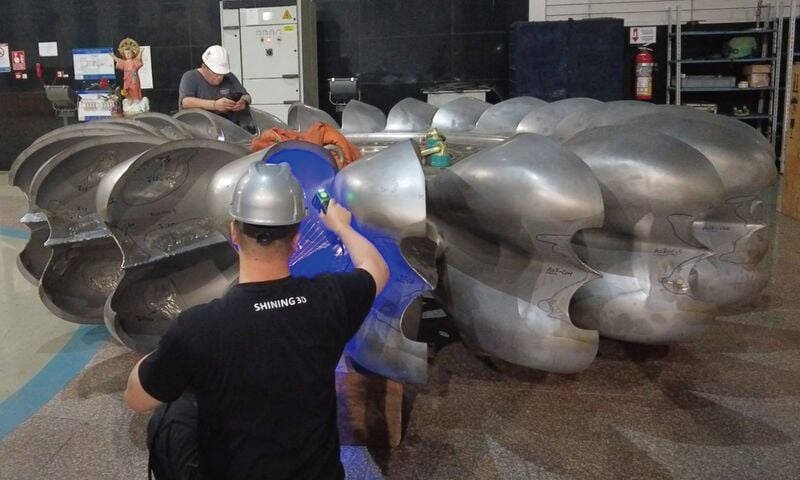
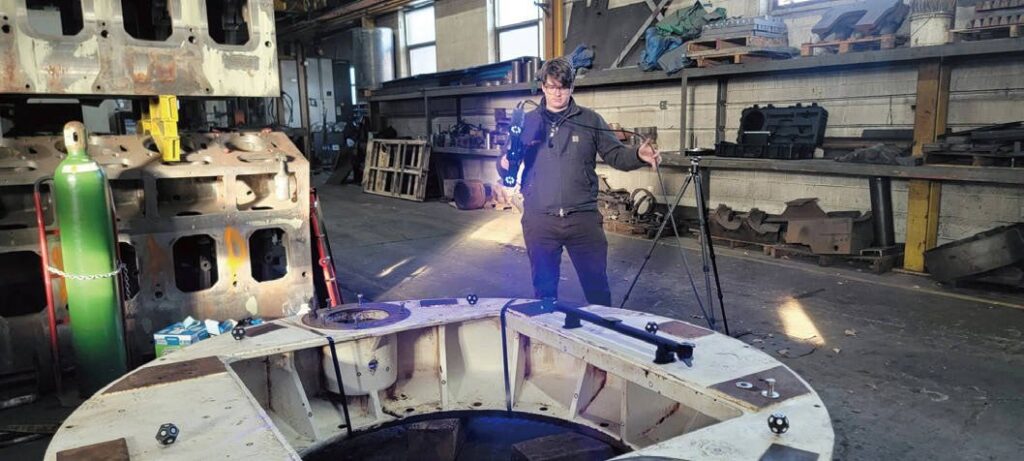
Scan the worn or damaged part, then build a CAD model of the intended geometry. Impellers, volutes and valve bodies have free-form surfaces that are slow to measure by hand and hard to model from a caliper; a scanner captures the complete shape in minutes.
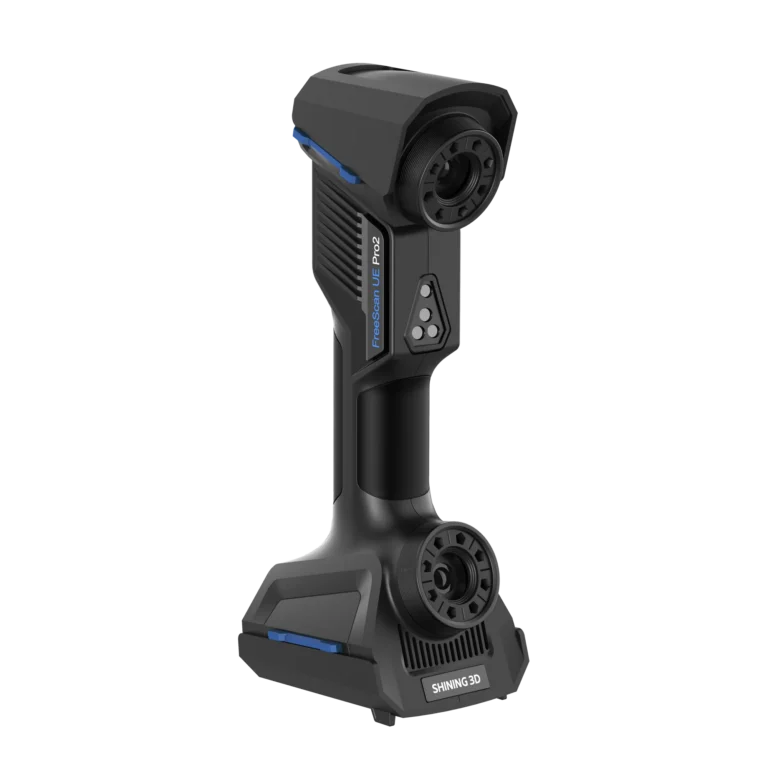
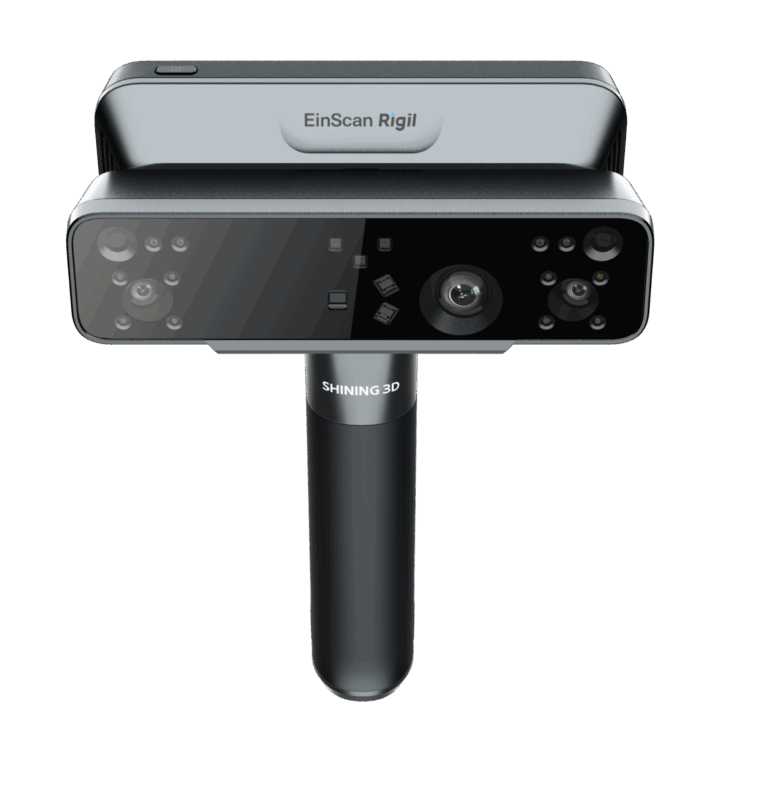
We recommend the EinScan Rigil for this work: standalone, marker-free and CAD-friendly, with volumetric 0.04 + 0.06 mm/m and resolution up to 0.05 mm. If the part also has to be inspected, for example the flatness of a flange face or blade profile against nominal, choose a FreeScan model, whose range is built for metrology. Our reverse engineering service delivers the CAD model from your sample. Material, casting, balancing and testing remain your specification: we provide the geometry, and we do not certify the finished part.


Yes, with handheld LiDAR. FJD Trion scanners walk through a space and build a point cloud as you go, which is quicker than tape-and-photo survey and captures areas that are hard to reach. Use the cloud to measure distances, plan a retrofit, check clearances for new equipment and fit pipe runs.
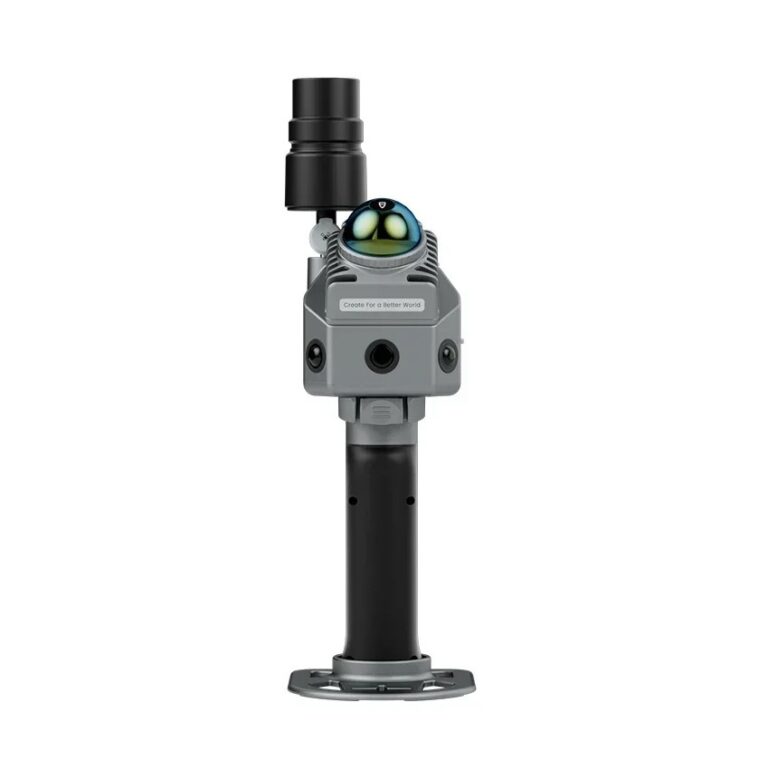
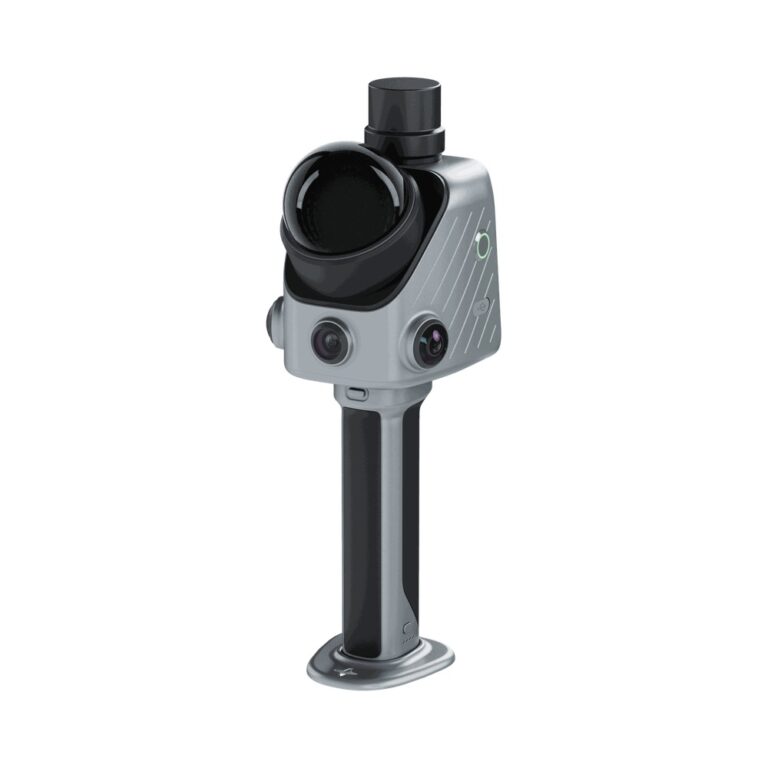
The FJD software includes automatic pipe centreline fitting for pipelines, and the same workflow suits piping in plant rooms. For compact spaces, the P2 and X1 are our usual picks; for larger sites with longer range, the S2. See our FJD Trion page. LiDAR accuracy is stated as relative (centimetre level) unless RTK or GNSS is used, so it suits as-built capture and planning; it does not replace a metrology scan of a precision part. Site access and safety permits are set by the site.
Match the tool to the subject: a part, a large component or a space. The table lists the models we supply, with manufacturer figures from our product pages and documentation (accuracy, volumetric accuracy and relative LiDAR accuracy are different measures, so do not read the table as a head-to-head test).
| Subject | Scanner | Stated figures |
|---|---|---|
| Pump, impeller, valve, flange: scan-to-CAD | EinScan Rigil | Volumetric 0.04 + 0.06 mm/m; resolution up to 0.05 mm; standalone |
| Parts that also need inspection | FreeScan Omni | 0.02 mm stated accuracy; volumetric 0.02 + 0.015 mm/m with photogrammetry |
| Plant rooms, engine rooms, compact spaces | FJD Trion P2 | Relative accuracy up to 1 cm; 200,000 points/s; 40 m range at 10% reflectivity |
| Larger sites, longer range | FJD Trion S2 | 640,000 points/s; 80 m range at 10% reflectivity |
| Where millimetre detail matters | FJD Trion T1 | Terrestrial accuracy 4 mm at 10 m |
Equipment


Buy when you survey or reverse engineer regularly, for example a yard, a maintenance team or a plant with many legacy parts. Use a service for a single shutdown, a one-off retrofit or a handful of parts. We scan at our office or on your site in Singapore and deliver a mesh, a CAD model or a point cloud with the measurements you need.
Many teams start with a service on a live job and buy once the workflow is proven. Either way, you work with the same local engineers, with installation, training, repair and servicing, and a 1-year warranty on the equipment we supply. If your repair needs a printed pattern, jig or fixture, we also supply industrial 3D printers; see our page on jigs, fixtures and end-use parts.
Video
Tell us the part or the space, the tolerance and the deliverable. We will recommend a scanner or run it as a service and arrange a demo.
Yes. We scan the impeller, then build a CAD model of the intended shape. The EinScan Rigil suits most impellers, and a FreeScan model suits blade profiles that must be inspected. Material, casting and balancing stay with your specification.
We walk the space with an FJD Trion handheld LiDAR scanner to build a point cloud. You then measure, plan retrofits and fit pipe runs in software. LiDAR accuracy is relative, at centimetre level, so it suits as-built capture rather than precision inspection.
For most planning and retrofit work, yes. The P2 states relative accuracy up to 1 cm and the T1 states 4 mm terrestrial accuracy at 10 m. Tell us the tolerance you need and we will recommend the model.
Yes. Handheld scanners work in sections, and a tracked system such as the FreeScan Trak Nova covers a 2.6 x 2.2 m field of view. Very large structures can be captured with LiDAR. Tell us the size and we will suggest the method.
Yes. We scan on your site or at our office in Singapore and deliver CAD models, meshes or point clouds. Site permits and safety rules follow your site. WhatsApp us the job details for a scoped quote.
We make no hazardous-area or intrinsically-safe claims for these scanners. Scan hazardous zones only where the site’s own permit and equipment rules allow it. Tell us the environment and we will check with the manufacturer’s documentation before recommending anything.